

self-destructive behaviors : ค้นหาหนังสือธรรมะ หน้า 4 / 34
หน้าหนังสือทั้งหมด
29
Part One: Family Life and the Importance of Truthfulness
Part One: Family Life
or not each will be responsible enough to assist with another
family member's life, death, success or failure.
A person who is truthful exhibits responsibility in many
ways:
In s
In this section, we discuss the significance of being truthful in our relationships and responsibilities. Truthfulness is essential in speech, work, and friendships. It emphasizes kindness and sinceri
30
Family Life: Self-Control and Endurance
Part One: Family Life
day. Self-control can also be referred to as "loving to train our
self". In order to do this, we need a great mentor, or teacher.
The problem, of course, is how to find one. Not
Part One of this text discusses the significance of self-control and endurance in personal growth. It highlights the necessity of finding a wise mentor to guide us in our journey to self-improvement.
118
Truth for the Family: Dhamma Teachings
Part Five: Truth for the Family
about Dhamma and learned that there was a set of teachings
specifically tailored for householders. They include four
main virtues, which are:
1. Truthfulness (sacca): T
Part Five discusses essential virtues for householders taught in Dhamma, emphasizing truthfulness, self-improvement, and enduring hardships. Truthfulness (sacca) encourages honesty and accountability,
142
Acts of Self-Discipline: Understanding the Five Precepts
Part Five: Truth for the Family
Chapter 25
Acts of Self-Discipline
What are the five precepts and why are they
important?
"The rules to live by" that good people universally
adhere to are known in as
In Chapter 25, 'Acts of Self-Discipline,' the importance of the Five Precepts is discussed as essential guidelines for living ethically. Many young people today overlook these codes, viewing virtuous

132
The Significance of Ordination in Buddhism
The contest serves to emphasise the aim and ideals of ordination, which is a realisation of Nibbana
and the self-discipline of following the principles of maintaining the precepts, pursuing meditation
The contest emphasizes the ideals of ordination, signifying the pursuit of Nibbana and the self-discipline required to maintain precepts, meditate, and attain wisdom. Practitioners can inspire others
57
Experiences at YUWA CAMP
YUWA CAMP was fun, happy and educative. All mentors were kind. I am sure the newcomers will have good time there just like I had. YUWA CAMP taught me to become a self-reliant, competent and good perso
YUWA CAMP is a joyful and educational experience that fosters self-reliance and good character in children. Mentors and participants share their positive experiences, friendships made, and the values
22
Understanding the Five Types of Mara
Suzanne Jeffrey
"The second type is called Kanta Mara and that is about the human body. Our present biology says that man is body, but in higher biology, man is composed of the human body and the min
In this excerpt, Suzanne Jeffrey elaborates on the concept of Mara, describing five distinct types: Kanta Mara (the body and mind functions), Gamma (action from karma), Deity (false gods), Matuman (fe
26
The Unknown Factor and the Balance of Creation
Suzanne Jeffrey
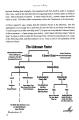
physical thinking that originally, God separated itself from itself in order to recognize
who it was. And, by the mere fact that in recognizing itself, it created a space in which to
เนื้อหานี้สำรวจแนวคิดเกี่ยวกับปัจจัยที่ไม่รู้จักซึ่งเป็น Dhamma และบทบาทของมันในความเป็นอยู่, ความสมดุล, และการสร้างสรรค์ ผ่านการสนทนากับหลวงพ่อและการอธิบายแผนภาพเกี่ยวกับการเข้าถึงความรู้และการปรับสม
128
Mappings with a Dharma Master
Mappings with a Dharma Master
we first start with our own individual self and then work outward in all directions.
“The six directions start with the smallest unit, ourselves. We are in the center o
The text discusses the importance of individual self-awareness and ethical behavior in shaping relationships and society. It emphasizes that one must start with self-improvement through meditation and
20
Formation of Habits
Formation of Habits
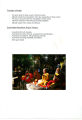
• The work which is done in each of the five rooms
• Attitude toward the consumption of the four necessities in these rooms
• The way to consume the four necessities in these rooms
The text discusses the formation of habits across five key areas of life, emphasizing proper training for cultivating good habits. It highlights attitudes towards necessities and living together, as w
120
Understanding True Divinity and the Inner Self
Because then we need to be aware of this standard before worrying about what true divinity is, how to promote that divinity, and where that divinity resides. How? Not anymore. We are more than enough.
The text emphasizes the importance of recognizing and understanding true divinity, which lies within one's inner self. It suggests that many misconceptions about divinity are rooted in ignorance. To g
10
Exploring the Dhammacakkapavattana Sutta and the Four Noble Truths
Contents
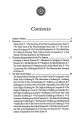
Author's Preface ............................................................................................................... 9
1 Overview ................................................
This text delves into the Dhammacakkapavattana Sutta, highlighting its key teachings on the paths of sensual indulgence and self-mortification, and emphasizes the Middle Way. The content covers the Fo
24
The Path of Self-Mortification in Buddhism
2. The Path of Self-Mortification
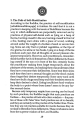
According to the Buddha, the practice of self-mortification [attakilamathānuyoga] is fruitless. He said that it is not a practice in keeping with the tenets of Buddhi
In Buddhism, the practice of self-mortification is deemed fruitless by the Buddha. He elucidates that these practices, such as lying on thorns and severe fasting, do not genuinely rid individuals of d
25
The Middle Way: A Path to Liberation
3. The Middle Way
The Middle Way [majjhima paṭipadā] is a path of practice that avoids the extremes of either sensual indulgence or self-mortification. It is a path of practice that is conducive to ta
The Middle Way [majjhima paṭipadā] serves as a balanced path in Buddhism, steering clear of both sensual pleasures and self-mortification. This approach is aimed at tempering the mind, achieving supre
41
The Noble Middle Way in Buddhism
sense of security, but in the end, he will surely take advantage of us and leave us decapitated in the jungle.
It is for all of these reasons that the Lord Buddha taught that self-mortification is a n
The text discusses self-mortification as a non-Buddhist and dangerous practice, as taught by the Buddha. It emphasizes the importance of the Noble Middle Way, or the Eightfold Path, as the means to un
105
Rediscovery of the Dhammakāya Tradition
mentaries for most people to understand. The knowledge of Dhammakāya is said to have diminished and eventually for some unknown reason, disappeared from Buddhism approximately 500 years after the Pari
The Dhammakāya tradition, once diminished in Buddhism, was revitalized by Luang Phaw Wat Paknam who dedicated his life to its teachings. His outreach efforts led to the tradition being acknowledged in
135
Understanding the Pathama Magga Sphere
the other virtues.
For as long as a meditator cultivates the Noble Eightfold
Path purely, completely and according to the principles of
the Middle Way (i.e. with the mind entering continuously
upon th
This text delves into the Pathama Magga Sphere, an important concept in meditation that arises when the Noble Eightfold Path is fully realized. It explains how the mind can be liberated from external
145
Understanding the Eightfold Path: Right Mindfulness and Right Concentration
fort: doing of evils not yet done, maintainance of evils already done, not doing virtues not yet done and abandoning virtues already mastered.
As for Right Mindfulness, he would immediately and defini
This excerpt explores the significance of the Eightfold Path, specifically focusing on Right Mindfulness and Right Concentration. It emphasizes understanding the aggregates of existence as they relate
225
Metaphors and Teachings on Suffering and Generosity
gardener removing weeds by the house-[metaphor for body 65]: inscure, [metaphor for Buddha's practice 95]
generosity 132
ghosts, hungry 34: realm of the, suffering of birth in 63
gossip, malicious (se
This text delves into various Buddhist concepts, including the metaphor of a gardener removing weeds representing the body, and insights into craving, suffering, and the consequences of sensual indulg
230
Insights into Buddhist Teachings
Kondaṇña 142; abstention from killing 158-60; instilled by loving kindness 141; tool of Right Livelihood 144
Right View 20, 39-40, 115, 117, 118, 141, 197: transcendental 39-40; mundane, 39, 147-51; a
This text discusses various Buddhist concepts such as Kondaṇña's role in understanding Right View and the importance of loving kindness and self-discipline in achieving liberation. It highlights examp